Which Nest Box for Which Bird? A UK Comparison Guide
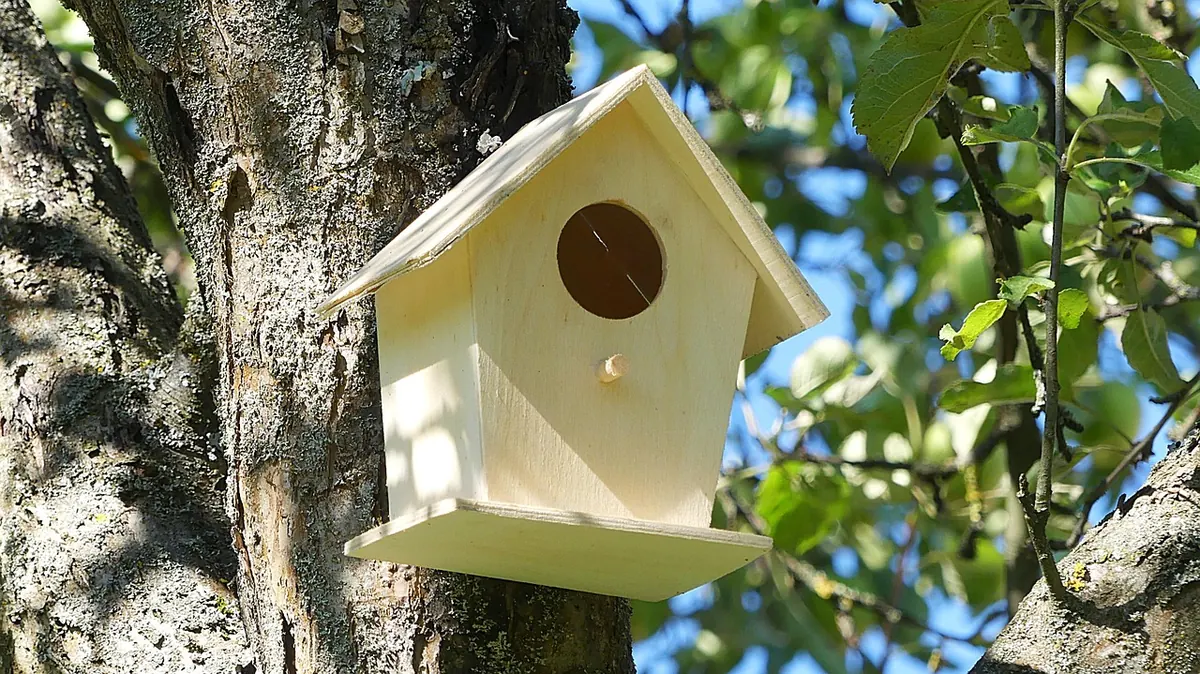
Putting up a nest box can feel like choosing a house for a tenant you have never met. Get the entrance hole, the height and the aspect right and you may be rewarded with a brood of blue tits, a chattering family of sparrows or a pair of swifts screaming past the eaves. Get it wrong and the box will hang there empty for years, or worse, become a damp, unsafe trap. The good news is that the rules are not complicated once you know which species you are building for.
Start with the hole: the single most important measurement
The diameter of the entrance hole decides who can get in — and, just as importantly, who cannot. A hole that is too large lets in bigger, more aggressive birds such as starlings, and gives predators an easier reach. A hole that is too small will simply be ignored.
- 25mm — coal tit, blue tit, marsh tit. Excludes great tits and most predators.
- 28mm — blue tit, tree sparrow, marsh tit. A good all-round small bird box.
- 32mm — great tit, nuthatch, house sparrow, pied flycatcher (in the west and Wales).
- 45mm — starling. Rarely used by anything smaller, so place it high and in clusters.
- Open front — robin, wren, spotted flycatcher, pied wagtail. No hole at all, just a large opening.
- Specialist designs — swift, house martin, barn owl, tawny owl, kestrel, jackdaw and treecreeper boxes all have their own shapes and dimensions.
If you can only put up one box, a 28mm hole with a removable metal plate is the safest bet. The plate stops woodpeckers and squirrels enlarging the entrance, and it means you can convert the box later without buying a new one.
Matching the box to the bird: a UK comparison
Small tits and their woodland cousins
Blue tits are the most accommodating garden nesters in Britain and will use almost any small box, provided it is 2–4 metres up, out of the prevailing wind and not in full sun. Coal tits prefer conifers and will happily take a 25mm box tucked into dense cover. Marsh tits are woodland specialists, rarely garden birds, and need boxes deep in mature woodland rather than on a fence post.
Great tits, nuthatches and sparrows
Great tits are early nesters and will inspect boxes from January, so get them up before Christmas if you can. Nuthatches favour a 32mm box fixed firmly to a mature tree trunk at 3–5 metres, and will often plaster mud around the entrance to reduce it to their liking — a good sign that the box has been claimed. House sparrows are colonial and will use boxes in noisy, social clusters of three or more, ideally under the eaves of a house or shed. Tree sparrows prefer 28mm holes and farmland or hedgerow edges.
Starlings and larger cavity nesters
Starlings are declining sharply in the UK and a 45mm box can make a genuine difference. They like height — 4 metres or more — and will nest in loose colonies, so a row of boxes under gable ends is far more attractive than a single one. Clean them out annually; starling boxes accumulate a lot of material.
Open-fronted boxes: robins, wrens and flycatchers
Robins and wrens will not use a hole. They want an open-fronted box with a deep lip, well hidden by ivy, honeysuckle or a climbing rose, at 1.5–2 metres. Spotted flycatchers take a similar design but prefer it fixed to a wall or tree trunk with a clear flight path to open ground, 2–4 metres up. Never put an open-fronted box in full sun: it will overheat and the chicks will not survive.
Specialist boxes: swifts, house martins and owls
Swifts need a very specific box, mounted at least 5 metres up under an overhang with a curved entrance and no perch. They are site-faithful, so if you can play swift calls near a new box in May, your chances improve. House martins use artificial cup nests fixed under the eaves. Barn owls need a large, deep box with a landing platform in a quiet barn, and tawny owls want a substantial box 4–6 metres up in a mature tree, with a 100–150mm entrance.
Design features that actually matter
- Timber thickness: 19mm or more keeps the interior insulated and stable.
- No perch: a perch is a gift to cats and grey squirrels.
- Drainage: a few small holes in the base stop water pooling.
- Ventilation: slight gaps under the roof or a couple of holes near the top.
- A sloped, overhanging roof: keeps rain off the entrance.
- Removable side or front: essential for cleaning and inspection.
- Untreated timber: never creosote, varnish or paint the inside.
- FSC-certified wood or woodcrete: woodcrete lasts decades and is harder for predators to damage.
Where to hang it, and which way should it face?
Aspect matters more than most people realise. An entrance facing between north and east avoids the worst of the midday sun and keeps the box cool during a heatwave, which is now a real cause of chick mortality in southern England. A south-facing box can exceed 40°C inside.
- Hang small bird boxes 2–4 metres up, angled slightly forward so rain runs off.
- Leave a clear flight path to the entrance — no branches directly in front.
- Space tit boxes at least 5 metres apart; tits are territorial.
- Cluster sparrow and starling boxes close together; they are social.
- Keep boxes away from feeding stations and nest boxes of other species.
- Fit a baffle or predator guard on the tree or pole below the box.
One clean, well-sited box in the right place will always outperform half a dozen poorly positioned ones.
A year in the life of a nest box
- October–November: clean out old nests, remove parasites with boiling water (no chemicals), and let the box dry fully with the side open.
- December–January: repair, replace rotten bases, fit new predator plates, and rehang. Great tits and robins may roost in boxes on cold nights.
- February–March: check fixings and clean camera lenses. Do not open boxes once nesting begins.
- April–July: watch from a distance. It is illegal to disturb a nest with eggs or young under the Wildlife and Countryside Act 1981.
- August–September: leave the box alone. Late broods and roosting birds may still be using it.
Common mistakes to avoid
- Putting the box in full sun because it looks nice from the kitchen window.
- Using a box with a perch, which helps cats and magpies.
- Hanging a 32mm box when you wanted blue tits — you will get great tits instead.
- Painting or varnishing the interior, which traps moisture and fumes.
- Checking the box every week during the breeding season.
- Forgetting that tree bumblebees often take over tit boxes — enjoy them, and clean in autumn.
Choose one species, match the hole, pick a sheltered spot facing north to east, and keep the box clean and dry. Do that, and the tenant will find you — usually in the first spring, sometimes sooner.
Photo: PIX1861 / Pixabay