
How to Create a Wildlife Pond That Attracts Birds and Insects
A pond is the most generous thing you can add to a garden, and it does not have to be big. A sunken half-barrel, an old sink, or a liner pond no larger than a dining table will pull in birds, dragonflies and frogs within a season. Birds use water to drink, to bathe and — indirectly — to feed, because the insects that breed in and around a pond become food for chicks. Get the siting, the edges and the planting roughly right, and the pond does the rest.
You do not need a pump, a filter or a fountain. In fact, moving water and the machinery that creates it can work against you: it costs energy, makes noise, and often encourages the wrong kind of algae. A still, plant-rich pond with sloping edges is closer to the puddles, ditches and farm ponds that British wildlife evolved with.
Choosing the Right Spot
Light matters most. Aim for a site in sun for at least half the day; insects and pond plants both need warmth. Some late-afternoon shade is a bonus, as it slows the algae that turns new ponds green.
Keep the pond clear of overhanging trees. Leaves rot down and feed algae, and roots can puncture a liner. Avoid low spots where run-off from a lawn or drive drains in, carrying nutrients and any weedkiller or fertiliser used nearby. Flat, level ground makes the whole job easier.
Think, too, about how you will watch it. A pond visible from a kitchen window gets far more use than one hidden behind the shed. A shrub or hedge within a few metres gives birds cover to approach from. A small log pile or a patch of long grass nearby adds another layer of shelter for frogs and insects.
Shape, Depth and a Way Out
Wildlife ponds should be shallow and varied. Around 45–60cm is plenty for a small garden pond, with one deeper section of about 75cm if you want frogs and newts to overwinter in the bottom mud. The middle matters less than the edges: wide, gently sloping margins give birds somewhere to wade and insects somewhere to emerge.
Butyl or EPDM liner suits a free-form pond; a preformed rigid liner is easier if you want something small and formal. Bed it on sand and a geotextile underlay, then hide the exposed edge with turf, stones or gravel.
Always leave an escape route. Vertical sides are lethal — hedgehogs, frogs, fledglings and beetles all fall in, and if they cannot climb out they drown. Build a shallow beach at one end, or lean a weathered plank or a large stone into the water at a gentle angle. A piece of rough timber works better than a smooth one, because small animals can grip it.
Leave fish out of it. Goldfish eat tadpoles, dragonfly larvae and almost everything else you are trying to encourage. If you already have fish in a pond, do not dump them into a wildlife pond; rehome them or keep the two habitats separate.
Filling It and Letting It Settle
Fill the pond with rainwater from a butt or tank. It is free, it is the right chemistry, and it avoids the nutrients and chlorine in tap water. If tap water is your only option the pond will still work, but expect a longer, greener settling-in period.
Do not panic when the water turns pea-green. Almost every new pond does this, and it is a phase rather than a fault. As plants establish and microscopic life moves in, the water usually clears on its own. Chemicals added to fix it damage the very things you built the pond for.
Top up in dry spells with rainwater rather than a hose, and let the water level rise and fall a little with the seasons. A fluctuating level exposes damp mud at the margins, which is exactly what many insects and seedlings need. If the pond is lined, make sure the liner is not left exposed to strong sun for long periods, as it will perish.
Planting in Layers
Plant the pond in layers, as you would a border, and aim for roughly half the surface to be shaded by midsummer. That keeps the water cool and limits algae while leaving open water for bathing.
- Oxygenators — hornwort, water starwort, water crowfoot. Kept submerged, they compete with algae for nutrients and give larvae somewhere to hide.
- Floating plants — a pygmy water lily or frogbit. Two or three are enough; these spread.
- Marginals — water forget-me-not, marsh marigold, brooklime, water mint, lesser spearwort, ragged robin. Set them on the shallow shelf so their leaves break the surface.
- Bog and bank plants — lady's smock, meadowsweet, soft rush, in the damp soil at the water's edge.
Stick to native species from a supplier who sells British-grown stock. A few non-native pond plants, including floating pennywort and parrot's feather, grow so fast they will smother a small pond within a season. Plant in aquatic baskets of aquatic compost topped with grit so the soil stays put, and sink them onto the shelf.
Leave some open water and some bare mud. A pond that is entirely filled with plants may look lush, but birds need a clear approach to bathe and drink. Aim for a mosaic: a clump of marginal leaves, a patch of floating shade, a shallow gravel beach, and a stretch of open water in the middle.
What the Birds Actually Need
Most garden birds drink and bathe daily, all year round. The key detail is a shallow ledge — 2–5cm of water over a rough surface, so a sparrow can stand and splash without going out of its depth. Add a half-submerged stone or piece of driftwood as a perch, and birds will queue on it.
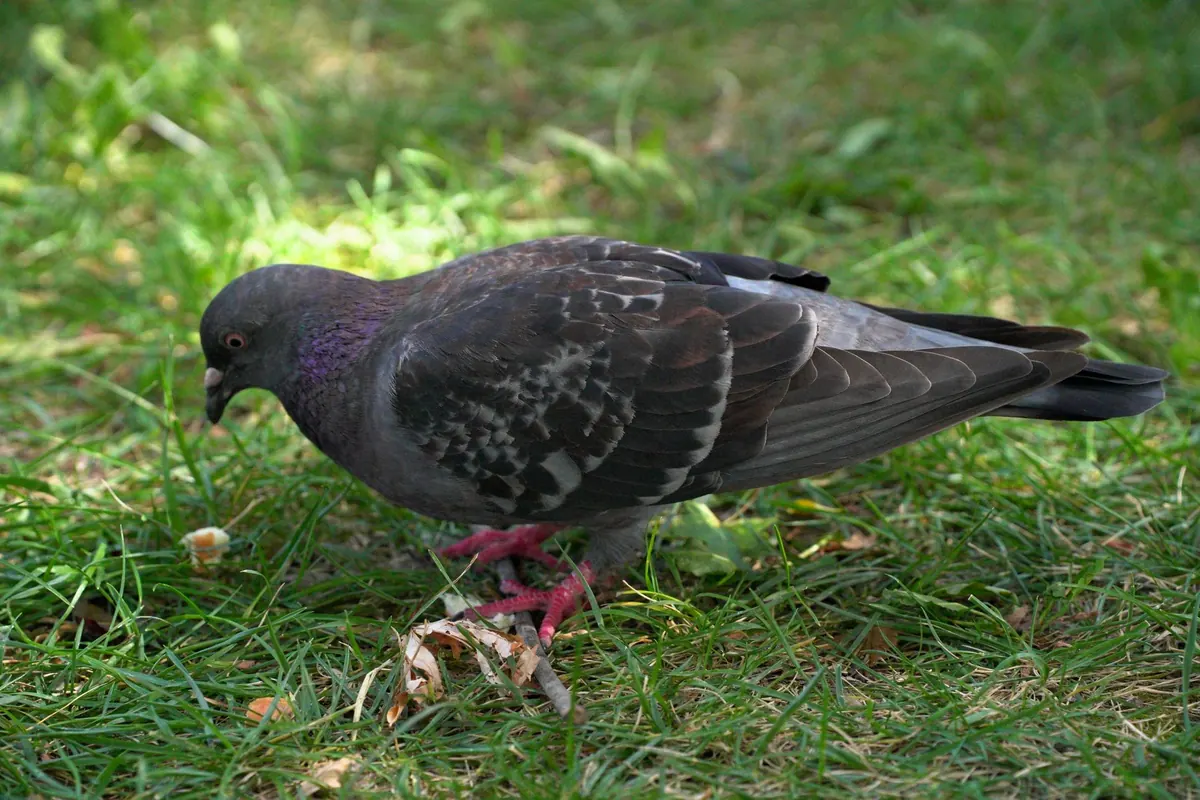
House sparrows, starlings, blackbirds, robins, blue tits and dunnocks will all use a pond, often in the same morning. In winter, keep a patch of water open by floating a small ball or a piece of cork on the surface, or by pouring a little warm water onto the ice at the edge. Never smash the ice with a hammer: the shock waves can kill fish and amphibians that are resting below.
“A birdbath is a place to wash. A pond is a place to live. The difference is the insects.”
Insects, Amphibians and the Food Web
The first arrivals are often the smallest. Within days of filling, water beetles, pond skaters and midge larvae appear, carried in on the wind or on the feet of birds. Damselflies and dragonflies follow within weeks, laying eggs on submerged stems. Their larvae are fierce little predators that spend months — sometimes years — under water before climbing a reed to emerge.
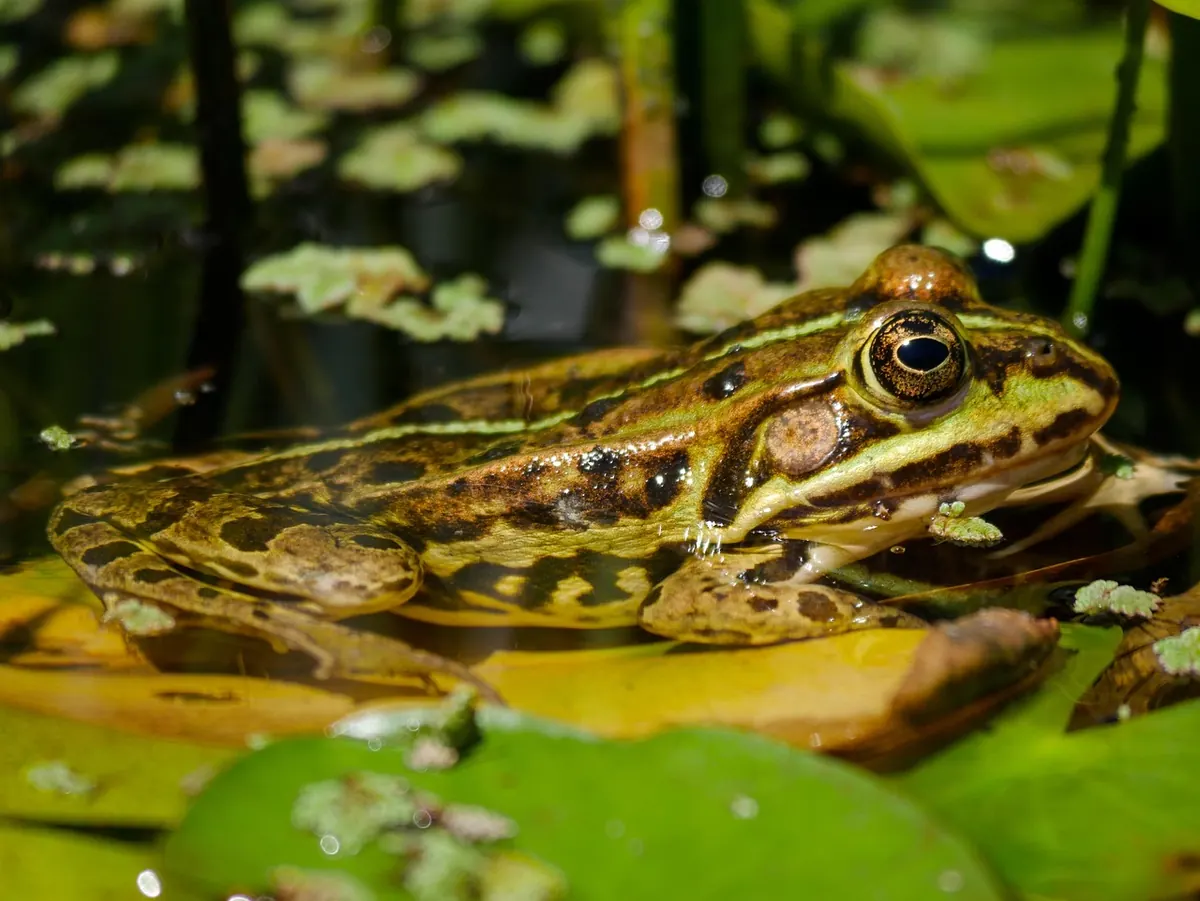
Frogs and newts usually find a new pond in their first spring. They need damp cover nearby, so let a corner of grass grow long, leave a few stones or logs at the edge, and avoid strimming the margins. Once tadpoles appear, herons, blackbirds, magpies and even moorhens will visit. That is not a problem; it is the point.
Do not introduce frogs, newts or fish from another pond. Moving wildlife between sites can spread disease and invasive plants. If you build it, they will come — provided the surrounding garden is not a chemical desert. Leave the slug pellets and insecticides in the shed.
Keeping It Wildlife-Friendly Year-Round
A wildlife pond is not a patio feature that needs polishing. It needs gentle management, mostly by hand.
- Spring: Top up with rainwater. Remove excess blanket weed with a stick, leaving it on the edge for a day so any creatures can crawl back in.
- Summer: Check the water level during dry spells. Leave seed heads on marginal plants. Do not feed the birds over the pond, as uneaten food fouls the water.
- Autumn: Net fallen leaves before they sink, but leave a few for overwintering insects. Cut back only plants that are smothering others.
- Winter: Keep a small area of ice open. Leave the pond alone otherwise. Frogs and newts will be dormant in the mud, and many insects are overwintering among the stems.
Every few years, in late autumn, thin out vigorous plants and remove some silt if the pond is filling in. Do it in stages, and leave the removed material at the side for a few days. You will be amazed how much life crawls back into the water.
A Small Pond, Big Results
A wildlife pond rewards patience more than money. The first year it may look like a muddy puddle. The second year the plants knit together, the water clears, and the air above it fills with dragonflies. By the third summer, birds will treat it as part of their daily round. You will have built a habitat, not just a water feature — and everything that visits will have found it on its own.
Photo: garten-gg / Pixabay