
Feathers Explained: Why Birds Moult and How to Support Them
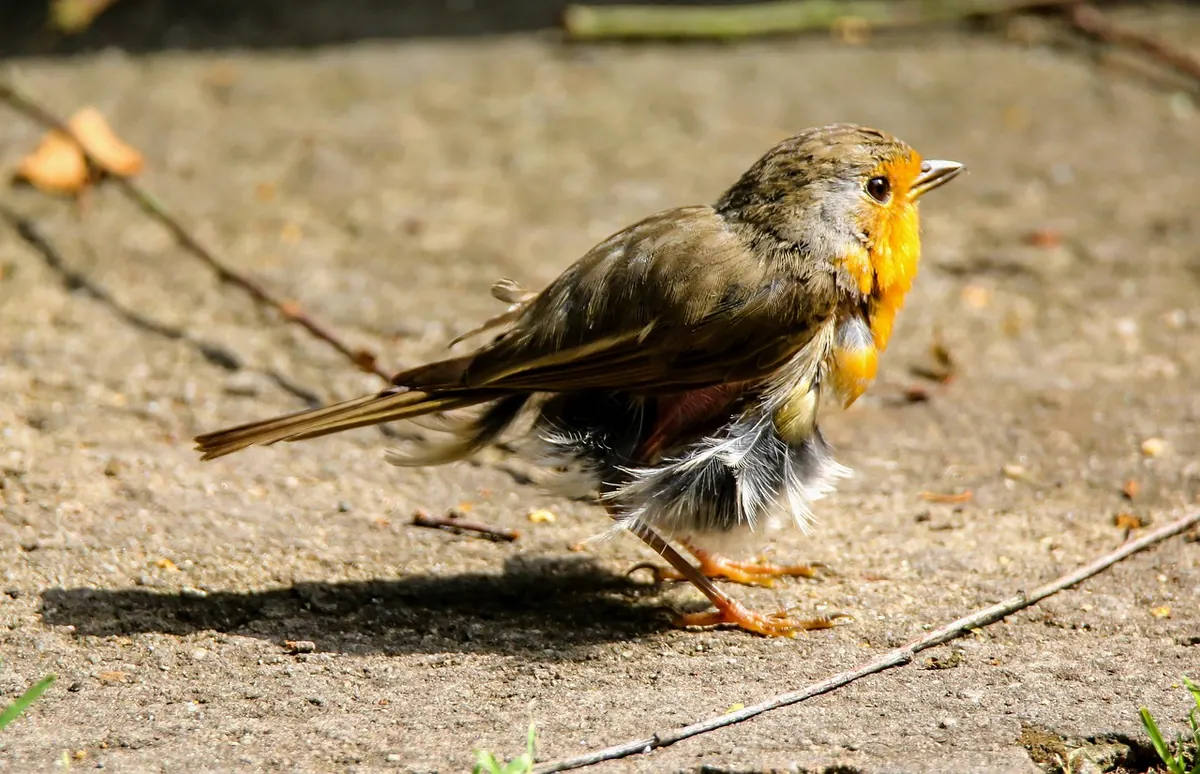
Feathers are built to take punishment. They carry a bird through wind and rain, through hedges and across long distances, and they do it with no ability to repair themselves. A feather is dead tissue the moment it finishes growing, rather like hair. When the barbs fray and the edges wear down, the only fix is replacement — and that replacement is what we call moulting.
It happens quietly, on a schedule most of us never notice, and it explains a lot of late-summer behaviour at the feeder: the scruffy blue tit, the blackbird with the ragged tail, the sudden drift of small feathers beside the bird bath. Knowing the rhythm helps you tell ordinary wear and tear from something worth a closer look.
Why birds moult at all
A feather is an elegant piece of engineering. A central shaft carries rows of barbs, and each barb carries smaller barbules with tiny hooks that zip the whole surface together into a smooth, flexible vane. Once those hooks come apart and the leading edges abrade, the structure cannot knit itself back together. Sun bleaches it, grit grinds it down, and constant preening only slows the decline.
Growing a replacement is expensive. It costs protein and energy, and for a few weeks the bird carries a small handicap: less insulation, less efficient flight, and a body that suddenly needs more fuel than usual. So birds do not moult at random. Most schedule it for a period when food is reasonably available and the demands of breeding are over.
The shape of a moulting season
In Britain, most garden birds moult once a year, mainly from late July into October. By then the chicks have fledged, the dawn chorus has gone quiet, and there is still enough insect life and seed around to pay for new feathers. Many small songbirds also have a partial moult in late winter or early spring, replacing body feathers while leaving the flight feathers alone — which is why a chaffinch can look suddenly crisp again in March.
Waterfowl do things differently. Ducks and geese drop their flight feathers more or less together in summer and spend a few weeks on the water, unable to fly well, in drab eclipse plumage. Drakes that looked resplendent in spring can be almost unrecognisable. A second moult in autumn restores their breeding colours.
Young birds have their own version. A nestling starts in down and grows its first proper set of feathers within weeks. That juvenile plumage is often looser and duller than an adult's, and it is replaced at the first proper moult. A speckled young robin in July is not moulting strangely. It is simply young.
What healthy feather loss looks like
Normal moult is gradual and symmetrical. Birds tend to drop a matching feather from each wing, so flight stays balanced, and the loss is spread over weeks. You will rarely see bare skin on a healthy moulting garden bird. The clues are gentler than that:
- A scatter of small feathers under a favourite perch, by the bird bath, or near a nest box.
- A bird that looks slightly shabby — thin tail, ragged wing tips, duller colour — for two or three weeks.
- Quieter behaviour: less singing, more time in cover, more preening. Moulting birds often hang back and let others reach the food first.
- Pin feathers, the new quills emerging in a waxy white sheath, visible on a tame bird or one being cared for indoors.
Some signs are worth a second look rather than a shrug:
- Bald patches on the head, neck or around the eyes, particularly outside late summer.
- Feathers that look chewed, broken or moth-eaten, or a bird that scratches and pecks at itself constantly.
- Heavy feather loss in midwinter or during the nesting season.
- A bird that is thin, sits fluffed up for long periods, or rests on the ground away from cover.
These can point to feather mites or lice, a poor diet, a skin problem, or stress — including repeated disturbance near a nest. If you keep birds, or you are looking after a rescue, ask a vet who works with birds rather than guessing. For wild birds, contact a wildlife rescue if the bird seems unwell rather than merely scruffy.
Food and water that carry a bird through a moult
Feathers are mostly keratin, a protein, so a moulting bird needs more protein than usual, along with fat and minerals. You do not need specialist products. A steady, varied supply of high-protein food alongside the usual seed will do the job.
- Mealworms, live or dried — soak dried ones first — are taken by robins, blackbirds, dunnocks, tits and wrens.
- Sunflower hearts plus suet pellets or balls suit most tits, finches and sparrows, and give fat with little waste.
- Nyjer seed for goldfinches and siskins.
- Peanuts, plain and unsalted from a reputable supplier, for tits and nuthatches. Never offer salted or dry-roasted nuts.
- Soft fruit, soaked raisins and the occasional bit of grated cheese for blackbirds, thrushes and robins.
Skip bread and leftovers. They fill a bird up without giving it much, and mouldy food causes real problems at a busy feeding station. Offer small amounts often, and clear away anything that has sat soggy or untouched for a day or two, especially in warm weather.
Water matters just as much as food. Birds need it for drinking and for bathing, and bathing keeps feathers in condition while softening the sheaths around new quills. A shallow dish with a gentle slope and a stone for footing works far better than a deep, steep-sided one. Refresh it daily, top it up twice a day in hot spells, and thaw it in freezing weather — birds still need to drink in a cold snap.
Hygiene, shelter and a little peace
A moulting bird is less agile, less waterproof and more exposed, so clean food, clean water and safe cover do more than any supplement.
- Clean feeders every week or two with hot, soapy water, using a bottle brush for tube feeders. Rinse thoroughly and let them dry before refilling.
- Empty and scrub the bird bath every few days, and more often in warm weather. Hot water and a good scrub are enough; avoid harsh chemicals.
- Shift feeders and baths around occasionally so droppings and spilled food do not build up in one spot.
- Leave a corner of the garden rough — long grass, a log pile, a dense shrub. Moulting birds use these to hide while they are vulnerable.
- Keep cats in or fit a quick-release collar with a bell, and keep dogs away from the bathing area.
- Resist the urge to handle wild birds to check their feathers. If you must, keep it brief and wash your hands afterwards.
If you keep birds in an aviary or are caring for an injured one, keep the space calm and well ventilated, offer the same high-protein foods, and follow your vet's advice on treatment. Feather trouble in captive birds usually means something in the diet, environment or health needs attention, not that a tonic is required.
Your moult-season checklist
Start with water. Cleaning and refilling the bird bath does more for a moulting bird than buying a new feeder. Then add one high-protein food to whatever you already put out, and keep it fresh rather than plentiful. Put feeder and bath cleaning on a schedule instead of reacting when something looks grimy. Leave the scruffy corner of the garden alone.
And then simply watch. A shabby blackbird in August, wings half-spread on the lawn, is not ill. It is growing a new set of feathers, and doing exactly what it should.
Photo: garten-gg / Pixabay