
A Beginner's Guide to Identifying 20 Common British Garden Birds
Some mornings the garden looks empty. Then a house sparrow drops onto the fence, a second follows, and within a minute eight of them are squabbling over the same patch of gravel. That is usually how it starts. Once you can name the handful of birds that treat your plot as home, the garden becomes a different place: you notice arrivals, disappearances, and the first morning each spring when the dawn chorus shifts up a gear.
You do not need expensive kit or years of study. A few key markings, one or two calls and a rough idea of what each species does with its day will carry you through most sightings. Here are twenty birds you are very likely to meet in Britain, grouped roughly by how you will notice them.
The everyday regulars
House Sparrow — The male has a grey crown, chestnut-brown back and a black bib below the chin. The female is plain buff-brown with a pale stripe behind the eye. They live in noisy family groups, and a dry patch of soil soon becomes a communal dust bath.
Starling — Black with white spangling in winter, then glossier with a bright yellow bill by spring. A starling walks; a blackbird hops. They are superb mimics, so a bird on your roof imitating a phone alarm is almost certainly a starling.
Blackbird — The male is black with an orange-yellow bill and eye-ring; the female is brown and mottled. Both work the ground, flicking leaves aside, and give a sharp chook-chook alarm when a cat appears. The fluty song from a rooftop at dusk is one of the best sounds of a British spring.
Song Thrush — Warmer brown above with neat, arrow-shaped spots below. It repeats each phrase of its song two or three times, which is the simplest way to separate it from a blackbird. Look for a favourite stone where it smashes snails.
Robin — Orange-red face and breast, brown above, and remarkably territorial for something so round. It sings almost all year, including mild winter nights under street lighting, and will often shadow a gardener for the insects turned up by a spade.
The small and the restless
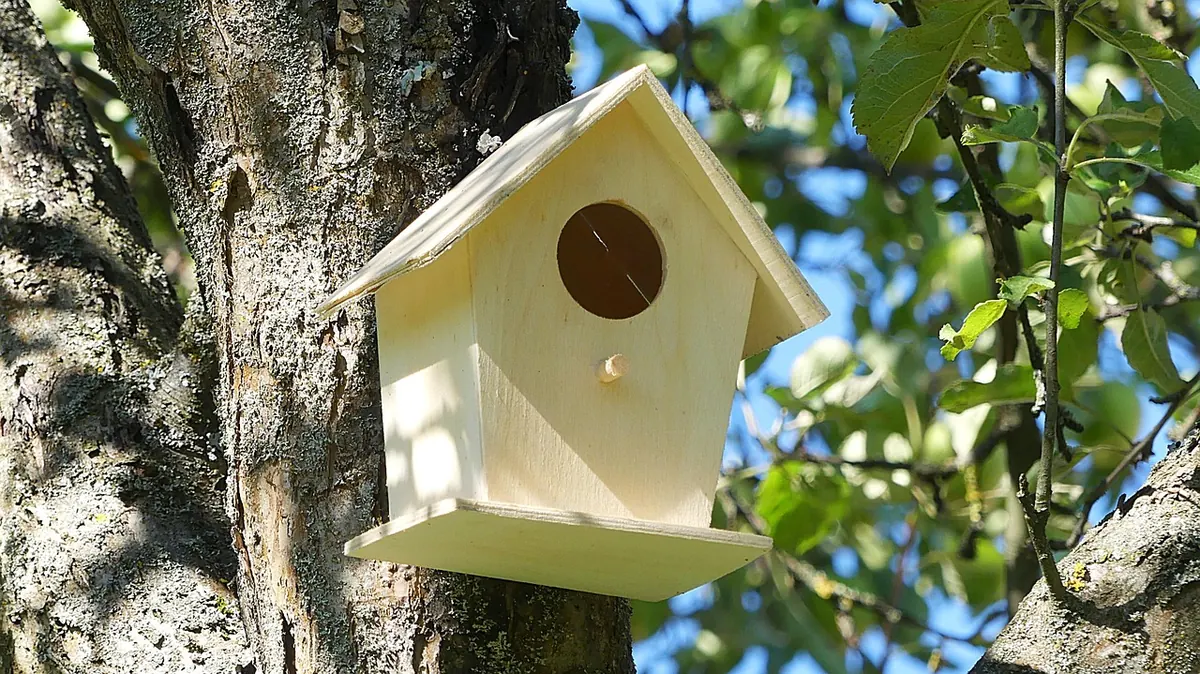
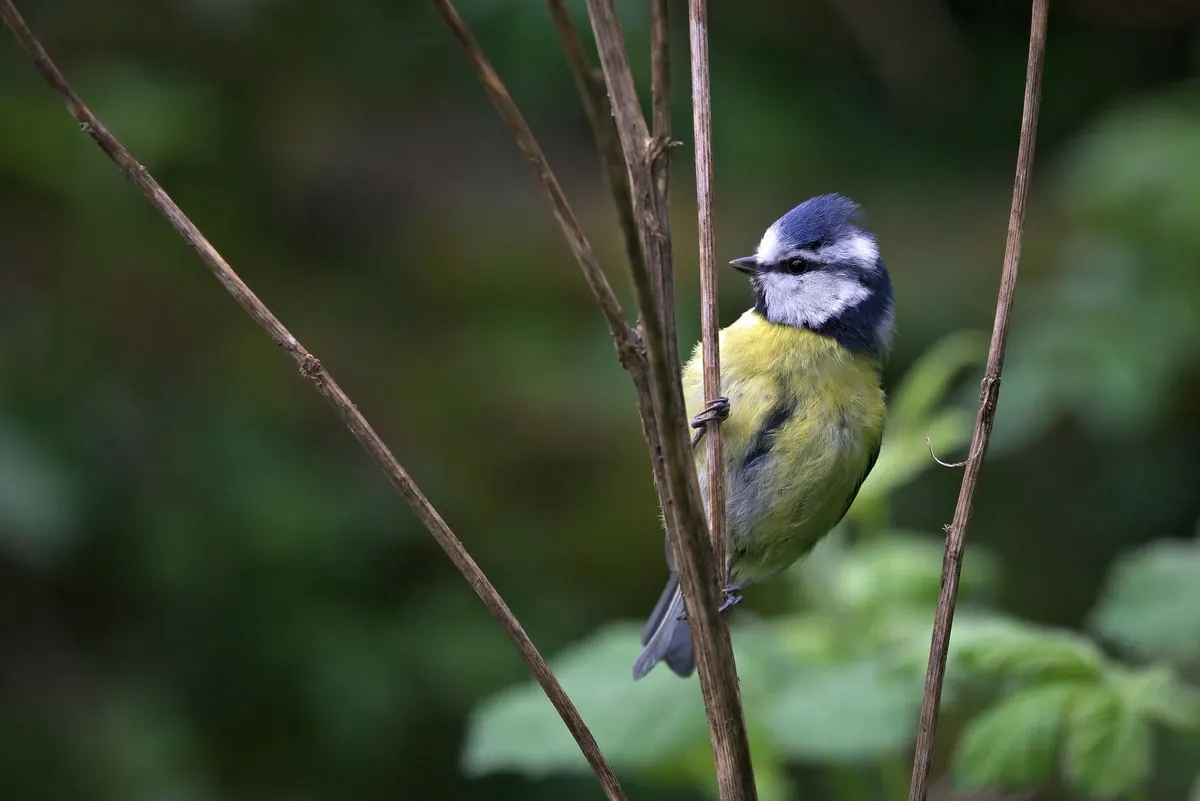
Blue Tit — Blue cap and wings, yellow underparts, white face crossed by a dark eye line. It hangs upside down on feeders and fat balls with no apparent effort, and takes readily to a small nest box.
Great Tit — Bigger, with a black head, white cheeks and a bold black stripe down a yellow belly. Its two-note song sounds like a squeaky bicycle pump, often written as teacher, teacher.
Coal Tit — Small and grey-backed, with a black cap and a distinctive white patch on the nape. Rather than feeding at the perch, it usually takes one seed and flies off to eat it in cover.
Long-tailed Tit — Pink, black and white, with a tail longer than its body. Family parties arrive in a restless wave, calling tsirrup to one another as they move through the hedge.
Wren — Tiny, brown and barred, with a short tail held cocked upright. It slips through the base of shrubs like a mouse, yet its song is astonishingly loud for the size of the bird.
Dunnock — Quiet and easy to overlook: grey head and breast, streaky brown back, thin pointed bill. It shuffles about in the shade beneath feeders rather than on them, singing a thin, hurried warble with no real tune.
Finches: colour, chatter and seed
Goldfinch — Red face, black and white head, a gold bar across the wing and a fine pointed bill built for teasel and nyjer. They feed in twittering flocks, often high in birch or alder.
Greenfinch — Chunky and greenish-yellow with a heavy pale bill and a bright flash of yellow along the wing edge. The song is a wheezy, drawn-out dzweee, often delivered from the top of a bush.
Chaffinch — The male has a blue-grey cap, pinkish breast and chestnut back; the female is a neat, plain brown. Both show white wing bars and white outer tail feathers in flight. The song is a loud cascade that finishes with a flourish, as though the bird has landed heavily.
Pigeons, crows and other big neighbours
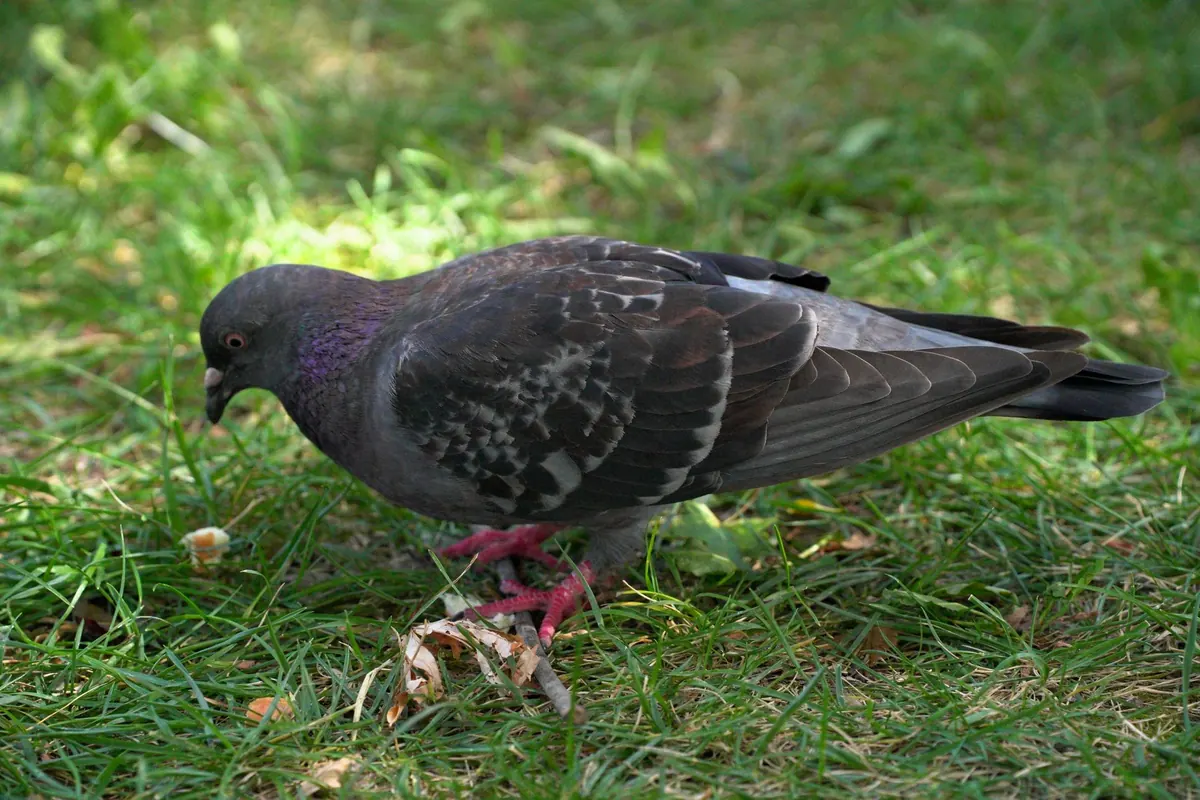
Woodpigeon — Grey, round-shouldered and surprisingly heavy, with a white neck patch and white wing bars in flight. Its five-note coo is often rendered as my toe bleeds, Betty, and the clatter of its take-off is unmistakable.
Collared Dove — Paler and slimmer, with a black half-collar and a red eye. The three-note coo, repeated for what feels like hours, is a fixture of suburban summer.
Magpie — Unmistakable black and white with a long tail that flashes blue-green in sunlight. Harsh, rattling chatter, and bold around other birds' nests.
Jay — Pinkish-brown with a small blue wing patch, a white rump in flight and a black moustache stripe. Usually heard before it is seen, screeching from deep cover. Jays bury acorns each autumn and plant a good number of our oaks by accident.
Jackdaw — The smallest common crow: black with a silver-grey nape and a pale eye. It says its own name, jack, and nests in chimneys and holes in old trees.
Winter visitors and the changing seasons
Redwing — A small thrush that arrives from Scandinavia in October and leaves in March. Dark brown above, with a pale stripe above the eye and rusty-red flanks. You may only hear the thin tseee calls as a flock passes overhead after dark.
The same months bring a few birds that are not on the main list but are worth knowing. Fieldfares, larger and greyer with a chestnut back, patrol lawns and berry bushes in hard weather, and siskins and bramblings turn up at feeders when northern seed crops fail. A cold snap can change your garden's population overnight: a fresh supply of water when everything else is frozen often draws in more birds than food alone.
Tuning your ear: calls worth learning
Songs are seasonal, but calls are used all year and are often the quickest way to identify a bird you cannot yet see. Start with these:
- Blackbird — sharp chook-chook alarm; rich, fluty song from a high perch.
- Robin — thin, high tsee contact call; clear, liquid song at almost any time of year.
- Blue Tit — fussy tsi-tsi-tsi; the song usually ends in a high, descending trill.
- Great Tit — the two-note teacher, teacher, delivered with metronome regularity.
- Goldfinch — bubbling, twittering chatter, often from a flock above your head.
- Woodpigeon — five drowsy coos, with the emphasis on the second.
- Jay — a harsh, tearing screech, usually from cover.
- Wren — a very fast, very loud trill that rattles on for several seconds.
Pick two of these to learn this week and ignore the rest. Recognising a call is rather like recognising a voice on the telephone: it takes repetition, not study.
Getting started: your first garden list
You do not need a hide or a long lens. A notebook and ten quiet minutes will do more for your identification skills than any amount of theory.
- Choose one window overlooking a feeder, hedge or shrub. Keep the glass reasonably clean and a pair of binoculars within reach.
- Sit still for ten minutes at roughly the same time each day, ideally early morning. Birds react to movement and noise far more than to a person behind glass.
- Note the date, the weather and what you saw, even if it reads "sparrow, sparrow, sparrow". Patterns appear within a fortnight.
- Offer sunflower hearts, nyjer and suet, keep a shallow dish of fresh water, and clean feeders every week or two with hot soapy water, rinsing thoroughly afterwards. Damp, mouldy food spreads disease.
Start with the twenty birds above and you will soon work out which are residents, which are passing through, and which only appear when the weather turns. The garden stops being a background and becomes somewhere with a story.
Photo: KM Wong / Pexels