
How to Set Up a Bird-Friendly Balcony in a UK Flat: A Step-by-Step Guide
Balconies get written off as the poor relation of the garden, yet a fourth-floor ledge in Sheffield or a narrow Juliet balcony in Bristol will pull in more birds than most people expect. Blue tits, goldfinches, house sparrows and the occasional determined robin will all use a well-placed feeder, and in built-up areas these small green islands matter. The trick is doing it neatly: a set-up that looks tidy, survives the wind, and does not drop husks onto the neighbour below. Here is how to build one that works.
Check the Rules Before You Buy Anything
Start with paperwork, not shopping. If you rent, your tenancy agreement may say what can be attached to the balcony, and leases for flats are often specific about drilling into walls, railings or window frames. A clamp-on bracket or a hanging hook usually sits outside those restrictions; a bolted wall pole may not. A quick email to your landlord, managing agent or freeholder settles it and saves an awkward conversation later.
Two other practicalities. Balconies in blocks of flats are frequently part of the fire escape route, so keep the floor clear and never block a door or walkway. And weight adds up quickly — compost, pots, water and feeders. Spread things along the railing rather than clustering them in one corner.
Choose Feeders and Food That Suit a Small Space
One well-run feeder attracts more birds than four neglected ones. On a compact balcony, a hanging feeder with a built-in tray, a clamp-on railing bracket, or a window feeder held by strong suction cups will all do the job. Check the suction cups weekly; they harden and give way, and a feeder landing on the pavement below is exactly the sort of thing that sours neighbours on the whole idea.
What to put out, and who tends to come
- Sunflower hearts — the workhorse. No husks, so very little mess, and popular with blue tits, great tits, coal tits and house sparrows.
- Nyjer seed — needs a fine-port feeder, but goldfinches and siskins rarely leave it alone.
- Suet balls or pellets — valuable in cold spells for starlings, sparrows and tits. Take them in during mild weather; suet turns rancid.
- Mealworms — dried or live. Robins, wrens and blue tits will take them, especially in spring.
- Peanuts — from a mesh feeder only, never salted or roasted. Whole peanuts are best avoided during the breeding season.
Skip bread, cooked leftovers and anything mouldy. They offer little nutrition, attract rats and gulls, and make a mess on the balcony below.
Water Is the Quiet Essential
A shallow dish of clean water brings in birds that never touch a feeder. Aim for about 2–3 cm of depth; anything deeper and small birds risk getting soaked. Add a few clean pebbles to the base for grip, and site the dish where you can see it but a neighbouring cat cannot reach it from a ledge.
Refresh the water daily and scrub the dish every few days, because algae and droppings build up fast in warm weather. In winter, break the ice each morning — never add salt or antifreeze, both of which are toxic. In summer, top up twice a day during hot spells and keep the dish out of the strongest midday sun.
Shelter and Cover, Even Without a Garden
Birds want somewhere to wait before committing to a feeder. Two or three pots of rosemary or lavender, or a small climber such as ivy or jasmine along the railing, give them a staging post and a place to retreat. Leave seed heads standing over winter where you can; they are food as well as cover.
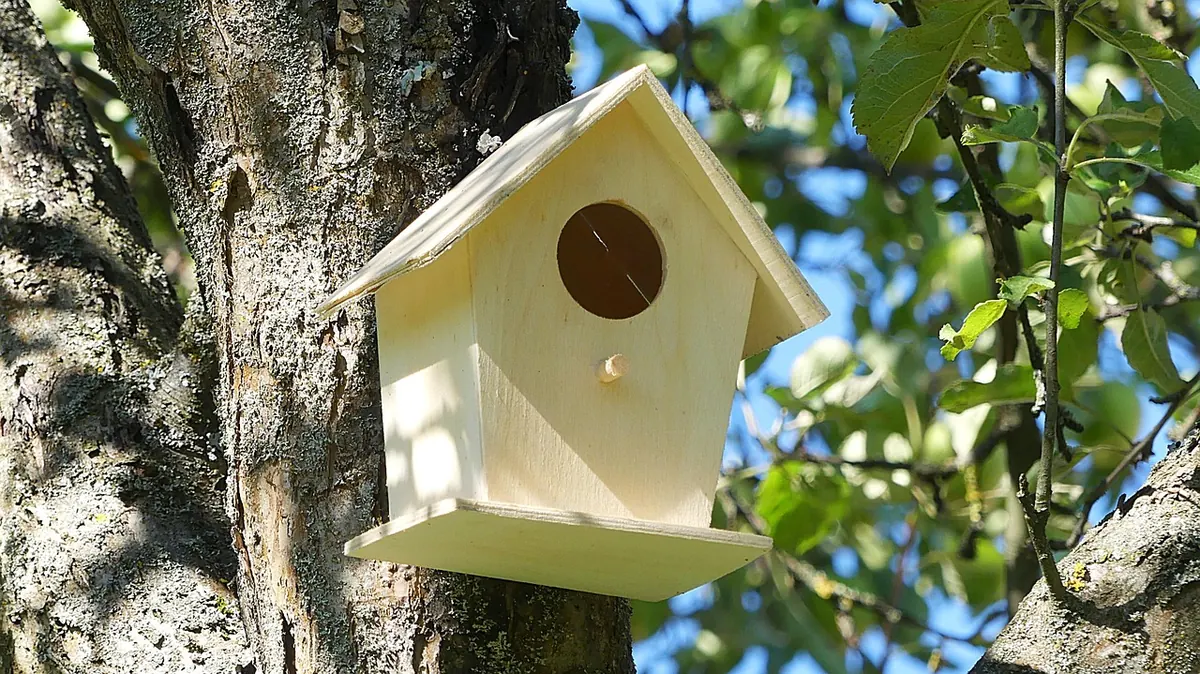
If your balcony faces roughly north or east and is sheltered from the worst of the rain and afternoon sun, a small nest box is worth a try. Fix it as high as you can safely reach, and then leave it alone — resist the urge to peer inside once birds are prospecting in spring. Empty and clean it in autumn with hot water only, no chemicals.
Keeping the Peace With Neighbours
Nearly every complaint about balcony feeding traces back to one of four things: mess, noise, rodents or pigeons.
- Mess. Husks and droppings rain downwards. Use husk-free food, fit a tray beneath the feeder, and sweep the balcony floor weekly.
- Noise. Feeders get busy at first light. If you get on with the people next door, mention it before it becomes a grievance, and keep the feeder away from their bedroom wall.
- Rodents. Spillage is the attraction. Feed little and often instead of filling a feeder to the brim, store food in a sealed tub indoors, and take leftovers in overnight.
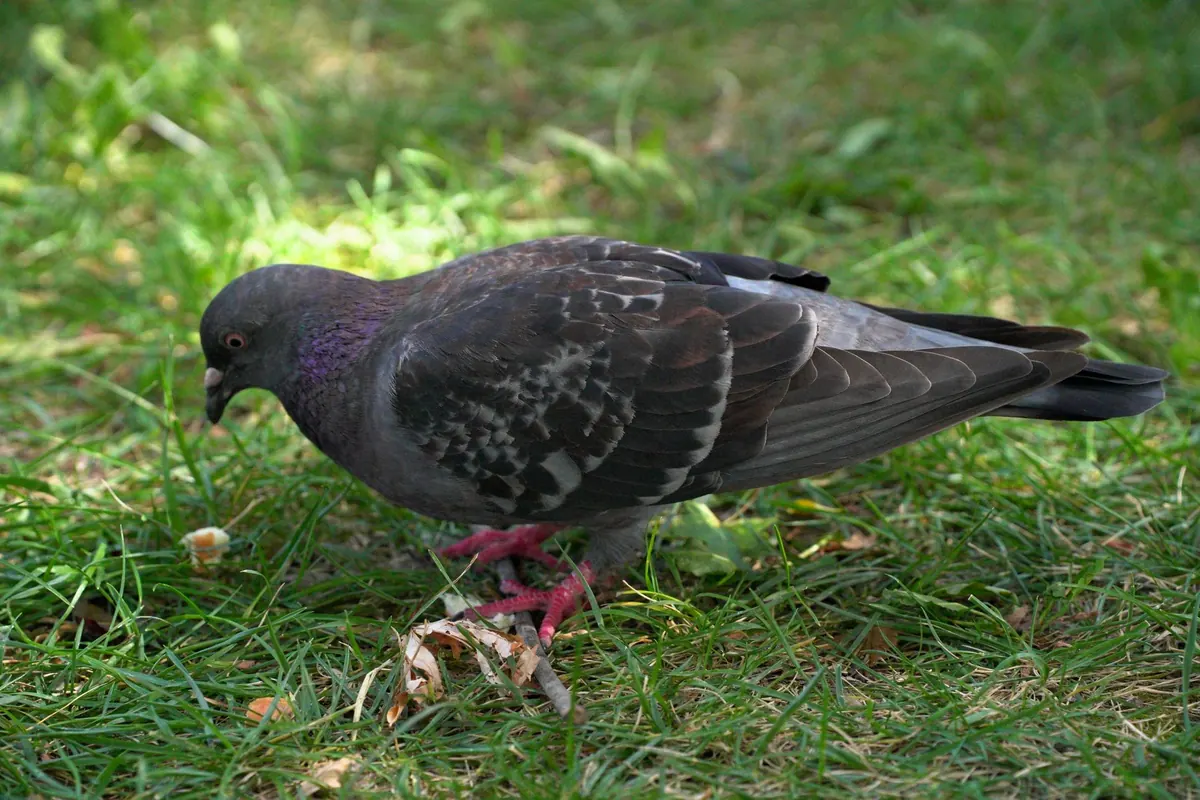
- Pigeons and gulls. They will empty a small feeder in minutes. A caged feeder, or one with short perches, keeps the larger birds off.
One further courtesy: hang nothing that overhangs a neighbour's balcony or a communal walkway, and think about where the husks will land before you put the feeder up, not afterwards.
A Safe Set-Up, Step by Step
- Check your lease or tenancy agreement, and make sure the fire escape route stays clear.
- Pick a spot you can see from a chair indoors. You will notice problems faster and enjoy it far more.
- Fix the feeder with a clamp bracket on the railing, or a window feeder on the glass. Secure it well enough for a gust, and recheck it after every storm.
- Think about the glass. Feeders either within a metre of the window or more than three metres from it; it is the middle ground where startled birds hit panes at speed. Decals help if you have had strikes.
- Put the water dish nearby but not directly beneath the feeder, so it stays free of droppings.
- Clean feeders every week or two with hot soapy water and a bottle brush, rinse well, and let them dry. Skip this and you can spread disease among the very birds you are trying to help.
- Wait. It can take a few weeks for word to get around. Keep the food fresh and the routine steady.
Making It Work Long Term
Start with one feeder and one water dish. Run it for a month, see what arrives and what ends up on the floor below, then adjust. If the balcony is windswept, move everything to the sheltered end. If nothing visits, change the food rather than the feeder. Keep a brush and a bowl of hot soapy water within reach so cleaning never becomes a job you keep postponing.
The reward is small but genuine: a goldfinch on a February morning, four floors up, thirty seconds from the kettle. Get the basics right — secure fixings, clean water, husk-free food, tidy habits — and you will have a balcony that works for the birds and keeps the peace with everyone else.
Photo: Antranias / Pixabay